
Douglas County Arrest Warrants Explained
An arrest warrant lets law enforcement take someone into custody on a criminal charge. In Douglas County, a District Court judicial officer issues it after finding probable cause, usually on a complaint or an application filed in the case. The order is one part of a proceeding that keeps moving after the arrest. The county's published list shows an arrest-type entry with the same short set of fields it gives other warrants. So the list is a starting point, not the full charge. The affidavit and the probable-cause narrative sit behind the order. Those are court or investigative material. Active investigative data can be restricted under Minnesota law.
Note: A warrant is a step in a case, and it is not a finding about what happened or who is responsible.
Douglas County Arrest Warrant Rules
Minnesota's criminal procedure rules give the process its shape. Rules 3.01 through 3.04 cover how a warrant issues, what it must contain, how it is served, and what happens when one is defective. That framework is what the District Court works inside. The public side is thinner than the file. In Douglas County, the list carries no affidavit, no charging statute, and no officer application. It cannot replace the case record. A reader who needs the substance of the accusation should read the case file through the court. The published entry will not carry it.
Inside a Douglas County Arrest Warrant
A published arrest-type entry in Douglas County carries six fields. Read in order, they show what was published and what the court file must still supply.
| Warrant Number | Court identifier in formats such as CR#### or 21CR##### |
|---|---|
| Warrant Type | Felony, gross misdemeanor, or misdemeanor category |
| Reason | A short label such as a probable-cause complaint or a court-process issue |
| Issued Date | The date the court issued the order |
| Age | Age as displayed, which is not a date of birth |
| Bond Amount | Present on some entries only, with the current figure set by the jail or court |
The list leaves plenty out. No issuing judge, charging statute, serving agency, custody status, or next hearing date appears on a Douglas County entry. Each of those lives in the case file, and any one can change after the list was generated.
Douglas County Officer Notice Rules
Minnesota law gives one step to the officer, not the court. Under Minn. Stat. 629.32, the officer making an arrest must inform the person of the authority for it. When the arrest is made under a warrant, the officer shows the warrant when it is available. The same section limits restraint to what the situation requires. That duty falls on the arresting officer in Douglas County. It belongs to no one else at the scene.
Key Rule: Minn. Stat. 629.32 covers notice to the person arrested and limits the restraint used.
None of this changes the order. Nothing here is negotiable at a scene in Douglas County. It does explain why an officer may describe the authority for a stop, and why the warrant itself remains the document that matters.
Serving Arrest Warrants in Douglas County
The sheriff's office publishes the county list, but it is not the only agency that can act on a warrant. City police, other Minnesota agencies, and federal partners can also serve one. Douglas County posts no service-by-agency table. Service happens on the agency's schedule, not the reader's. The county warns that a listed warrant may already have been served. So treat any list entry as a dated lead. Confirm with the court file or the jail first. Bring a case number. That single move turns a general question into a specific one about a Douglas County warrant.
Douglas County Sheriff's Office
216 7th Avenue West, Alexandria, MN 56308
320-762-8151
Douglas County Court Administration
720 Elm Street, Alexandria, MN 56308
320-304-6050
Douglas County Jail
509 3rd Avenue West, Alexandria, MN 56308
320-762-2139
Douglas County Arrest Warrant Limits
A published entry answers a narrow question: whether this record hit the county list, and when. Everything else a reader wants sits one layer below in Douglas County.
| What a reader asks | Published list | Where the answer lives |
|---|---|---|
| What is the charge? | Type only | Court case file |
| Is the order active? | Not answered | Court file or jail |
| What is the bond? | Optional and dated | Jail |
| Has it been served? | Not answered | Court file or jail |
Minn. Stat. 13.82 can keep some arrest-warrant-index data confidential until custody, service, or an appearance. That is an access limit. Even a diligent Douglas County search can hit it instead of a result.
Comparing Arrest, Summons, and Bench Warrants
Douglas County readers mix up three court orders, and the differences shape what happens next.
| Order | How it starts | What follows |
|---|---|---|
| Arrest warrant | A probable-cause finding on a charge | Law enforcement may take the person into custody |
| Summons | A charge filed with a court date set | The person appears in court rather than being arrested first |
| Bench warrant | A missed hearing or a court-order problem | The court brings the person back into an existing case |
A sign-and-release warrant, set out in Minn. Stat. 629.415, is a statutory category for qualifying failure-to-appear situations. It carries conditions, and it never closes the Douglas County case.
Douglas County Search Warrant News
Douglas County press releases about search warrants describe investigations. They are not an arrest-warrant lookup. A search warrant authorizes a search of a place or item, while an arrest warrant authorizes taking a person into custody. The two can appear in one investigation and still answer different questions.
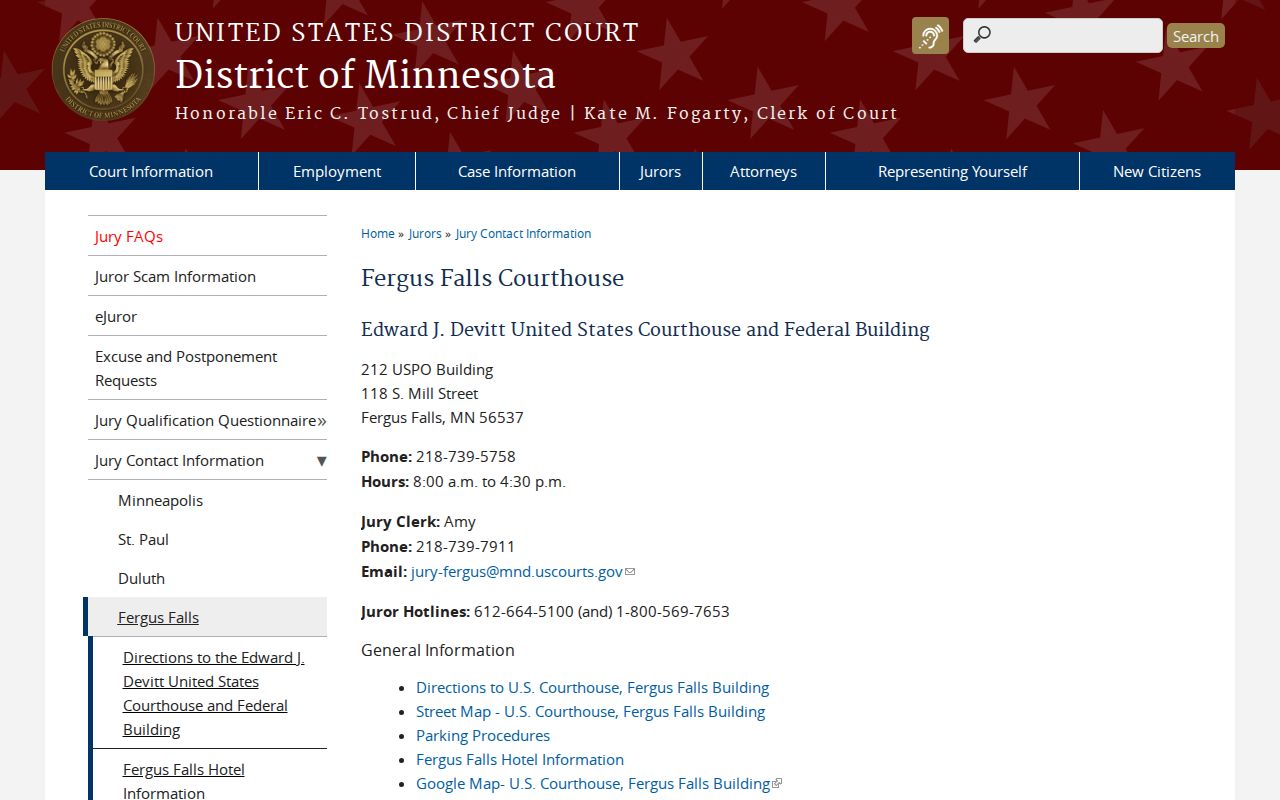
Federal matters run on a separate track. Federal warrant questions go through the U.S. Marshals Service and the federal clerk rather than the Douglas County list. The nearest listed federal courthouse for this area sits in Fergus Falls. A federal docket result and a Minnesota county result are two separate checks. Neither one answers the other.
If There's an Arrest Warrant for You
An active arrest warrant is the most time-sensitive thing you can find in Douglas County warrant records. Get a licensed Minnesota attorney on the phone first. Then work through the court's own process, not an informal arrangement worked out on the side.
Urgent: Do not try to resolve an active warrant on your own terms in public. Use counsel, the court, or the jail route.
Self-surrender at the jail is open in Douglas County every day of the year. Arrive before 6:00 a.m. Staff then try to place the case on that day's court roster, though the county calls it an attempt rather than a guarantee. Bring photo identification. Leave most personal property at home. Ask the jail for the current bail or bond figure instead of relying on a published amount, since those numbers can shift. What follows an arrest is case-specific. Bond terms, release conditions, and the next court appearance all depend on the file. The Douglas County warrant records overview walks through the general sequence.
Sign-and-Release Warrants in Douglas County
Minnesota recognizes a middle ground between a standard arrest and a release on the spot. Two statutes drive it in Douglas County. Minn. Stat. 629.415 sets out summons and sign-and-release warrant situations for qualifying failure-to-appear cases. Minn. Stat. 609.49 deals with failure to appear across different offense levels and adds a voluntary-surrender provision in one felony context. The label on a warrant carries real weight here. Two Douglas County cases can both read as a failure to appear yet carry different conditions, and only the case file and the jail can say which applies. Treat no statutory category as a promise of release. Treat none as a reason to delay either.
Note: Conditions of release come from the court and the jail, not from a published list entry.