
Douglas County's Most Wanted Program
A most wanted page is a program, not a database. An agency picks a handful of cases, builds a public-safety message around them, and often adds a reward or a tip line to pull information in. That is a narrow product compared with a full list of open warrants. In Douglas County, the sheriff handles the enforcement side through investigations work and its Crime Stoppers participation. The county posts no separate most wanted roster, no local reward schedule, and no photo gallery. The warrant list itself is the published set.
Note: Where a county list exists, the right way to use it is to link the official page rather than copy its contents.
What Douglas County Warrant Programs Publish
Douglas County puts the public side of this work into three official channels. Each channel has its own job.
| Channel | What it does | What it is not |
|---|---|---|
| Outstanding warrants list | Publishes the county's active entries by name | Not a ranked or curated most wanted group |
| Investigations and tip pages | Collect help on open cases | Not a warrant lookup |
| Crime Stoppers policy | Sets how anonymous tips and rewards are handled | Not a roster of individuals |
The sheriff's warrant list is the closest thing to a public set of open warrants in Douglas County. It runs deliberately broad. Traffic matters and failure-to-appear cases sit alongside more serious charges, and no entry is ranked by seriousness.
How the Most Wanted Lists Work
Any public warrant page updates on the agency's schedule, not in real time, and a most wanted list works the same way. What a reader sees is a snapshot. The case behind an entry can move between updates, so treat every listing as a moment frozen in time rather than a live status. Selection is the other difference. A full active warrant list includes everyone who meets the publication criteria, while a curated list reflects an agency's judgment about which cases need public attention most. Douglas County publishes the first kind. Readers should not read special emphasis into any single entry, because the list simply includes everyone who qualifies under its criteria.
DCSO Most Wanted Tip Policy in Douglas County
The sheriff's office keeps a Crime Stoppers policy, effective September 2, 2024. It spells out how the program runs inside the agency. Participation, anonymous tip coordination, and the possibility of rewards are all covered, with the work assigned to the Criminal Investigation Bureau in Douglas County.
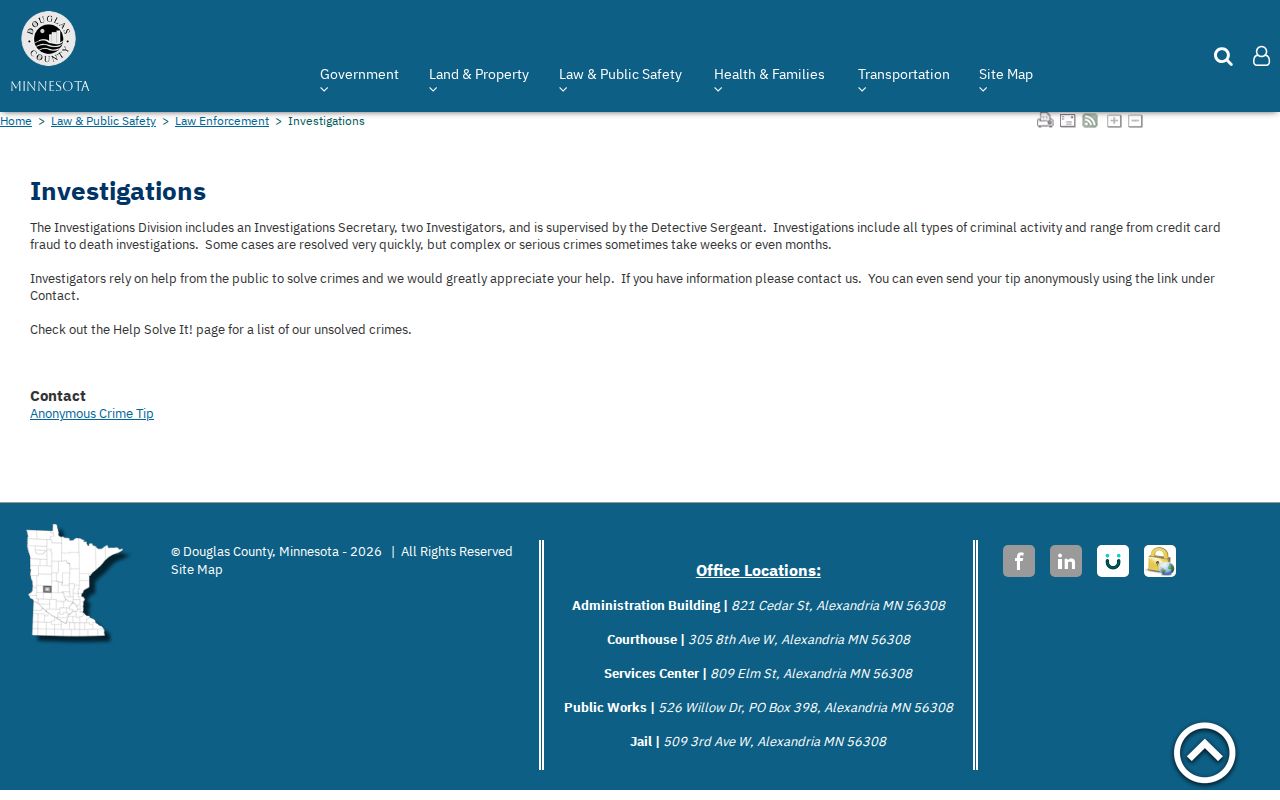
The county's investigations page is the public doorway to that program. The Crime Stoppers policy document describes the internal handling. A tip policy is not a list of names.
Reporting a Tip Safely
A tip is information about a case, nothing more. The official routes are built to take it without exposing the person who sends it. Use the channel Douglas County publishes, and send only what is asked for.
Key Routes:
Statewide Crime Stoppers accepts anonymous tips at 800-222-8477 and through its online and mobile tip options.
The Douglas County Sheriff's Office takes location information at 320-762-8151 and tells readers not to attempt an arrest.
Never approach anyone named in a case. Do not post names, photos, or plates in a public thread. Someone with information about a Douglas County case belongs on a tip channel. If danger is present or a crime is happening, call for emergency help instead.
Douglas County Most Wanted Rewards
The tip side of this work runs through a small set of official channels.
Statewide Crime Stoppers
Anonymous tips by phone at 800-222-8477, and through the program's online and mobile options.
Douglas County Sheriff's Office
Location information and case questions at 320-762-8151, with a published warning not to attempt an arrest.
Douglas County Investigations
The county's public doorway to investigations and tip programs for open cases.
Rewards are program-level and conditional. The statewide Crime Stoppers program describes possible rewards of up to $1,000 for information leading to a felony arrest. That figure follows the program's own eligibility rules. It is not a Douglas County cap or a promise tied to any one case.
Note: A reward is paid under program rules and only when the information meets the program's criteria.
Most Wanted Lists vs Active Warrants
The two ideas overlap. In Douglas County, the differences matter most when deciding where to look.
| Point | Most wanted list | Active warrant list |
|---|---|---|
| Selection | An agency picks the cases | Meets publication criteria |
| Purpose | Public attention and tips | Public notice of open warrants |
| Rewards | Often attached to the program | Not part of the list |
| Douglas County | No separate county roster located | Published by the sheriff's office |
Douglas County publishes the broader list, not a curated one. A reader comparing the two would find nothing to compare here. The county list is the official published set, and the program side is about tips rather than ranking.
A Douglas County Tip Is Not a Warrant Check
Sending a tip and running a warrant check are opposite uses of the same office. One hands information to investigators. The other asks the county to confirm a status. A tip line is not staffed to say whether a person has a warrant, and a records request is not a way to report a case. The confusion usually costs time rather than accuracy. Someone who wants to know about a Douglas County warrant should use the county list, the state court system, and the jail. Someone who saw something connected to an open investigation should use a tip channel. The outstanding warrants page covers the status side of that split in full.
If You Think You Are on a List
A name on a public page is not an invitation to act alone. Do not contact the person who posted it. Douglas County's own notice tells readers not to attempt an arrest.
Urgent: Contact a licensed Minnesota attorney and Court Administration. Do not approach or confront anyone named on a public list.
The court file is where a status gets confirmed. Court Administration at 320-304-6050 can describe what the case shows. If a warrant is active and the person intends to appear, the Douglas County self-surrender route at the jail is open every day of the year.
How a Douglas County Warrant Tip Moves
A tip travels a short road inside the Douglas County agency. It lands in an anonymous channel first. Then someone screens it and sends it to the Criminal Investigation Bureau for assignment under the county's Crime Stoppers policy. From that point, it is worked like any other lead.
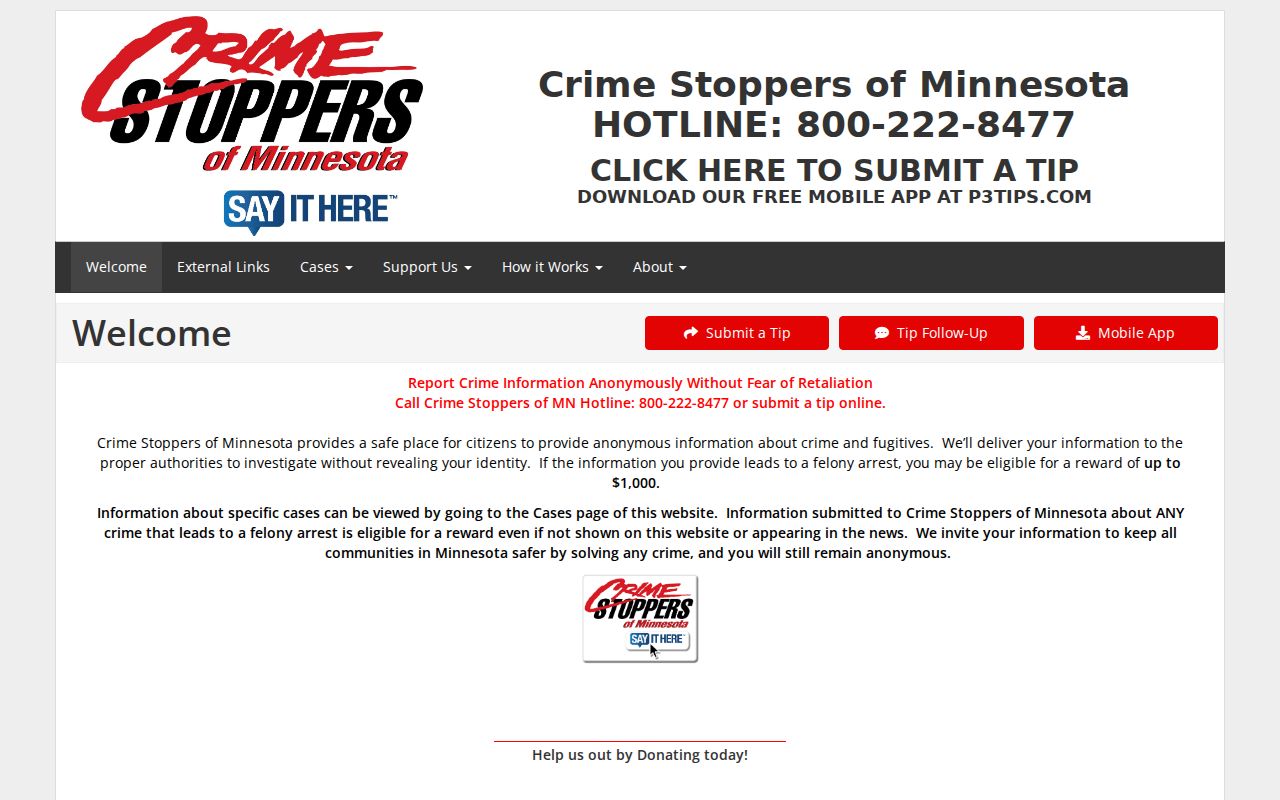
The statewide Crime Stoppers interface is the anonymous way in for Douglas County. Senders stay nameless throughout. A tip never becomes a public record of the person behind it, and it does not clear a warrant for anyone either.